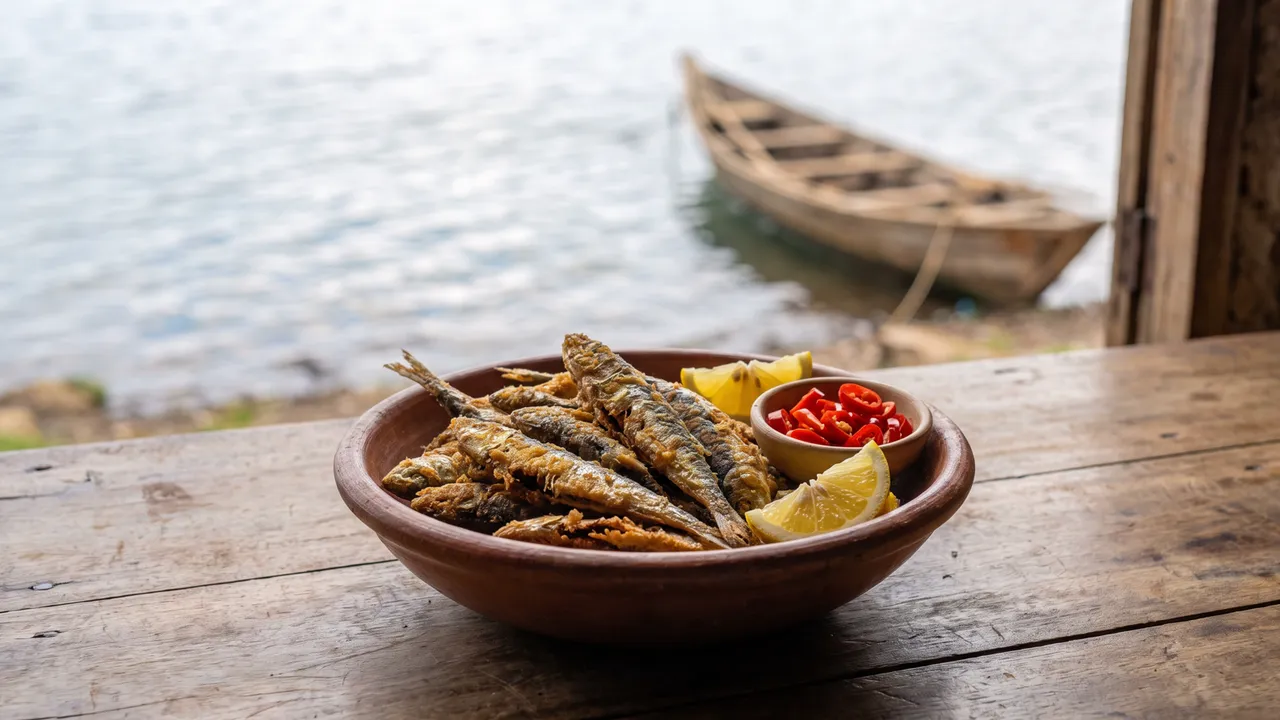
Isambaza (Lake Kivu Sardines)
At a glance
| Type of food | Small freshwater sardine |
|---|---|
| Species | Limnothrissa miodon, the Lake Tanganyika sardine |
| Where caught | Lake Kivu |
| Eaten | Fried whole; also dried and smoked |
Source: FAO: G. Hanek and T. Baziramwabo, Fisheries development on Lake Kivu (Rwanda), credit system and marketing; Wikipedia: Lake Tanganyika sardine (Limnothrissa miodon)1,2
What They Are
Isambaza are small sardines of the species Limnothrissa miodon. They are not native to Rwanda: the fish was brought from Lake Tanganyika and introduced to Lake Kivu in 1959. Two sardine species were tried, and only this one adapted. It became the most important fish stock in the lake.1,2
How They Are Fished
Fishing is done at night from boats, with lights and nets. FAO describes a team of ten women from Nkombo island in Rusizi District who set out at 2 a.m. and catch isambaza along with other small fish. To let the stock recover, the authorities suspend fishing on Lake Kivu once a year for about two months, between July and October.3,4
How They Are Eaten
Isambaza are usually fried and eaten whole, often as a snack in the evening or when friends meet. They are also sold dried, frozen and smoked. FAO training for fishing cooperatives in Rusizi has included smoke-drying, which keeps the fish longer and earns a better price than selling it raw.5,3,1
A Newer Food
Fish was not traditionally part of most Rwandan diets. An FAO report on the Lake Kivu project notes old taboos against eating fish, eggs and birds, linked to the importance of cattle. After about ten years of promotion through schools, nutrition centres, restaurants, hotels and market women, fish consumption had tripled from 0.2 to 0.6 kg per person a year.1
Frequently Asked Questions
What are isambaza?
Small sardines from Lake Kivu, of the species Limnothrissa miodon.
Are isambaza native to Lake Kivu?
No. The species was brought from Lake Tanganyika in 1959 and is now the lake’s most important fish.
Is there a fishing break?
Yes. Fishing on Lake Kivu is suspended once a year for about two months, between July and October.
Sources
- FAO: G. Hanek and T. Baziramwabo, Fisheries development on Lake Kivu (Rwanda), credit system and marketing
- Wikipedia: Lake Tanganyika sardine (Limnothrissa miodon)
- FAO: Trying out the net
- The New Times: Impact of fishing breaks in Lake Kivu
- Wikipedia: Rwandan cuisine
Facts checked 9 November 2026. Prepared by InvestRwanda.com for general information.