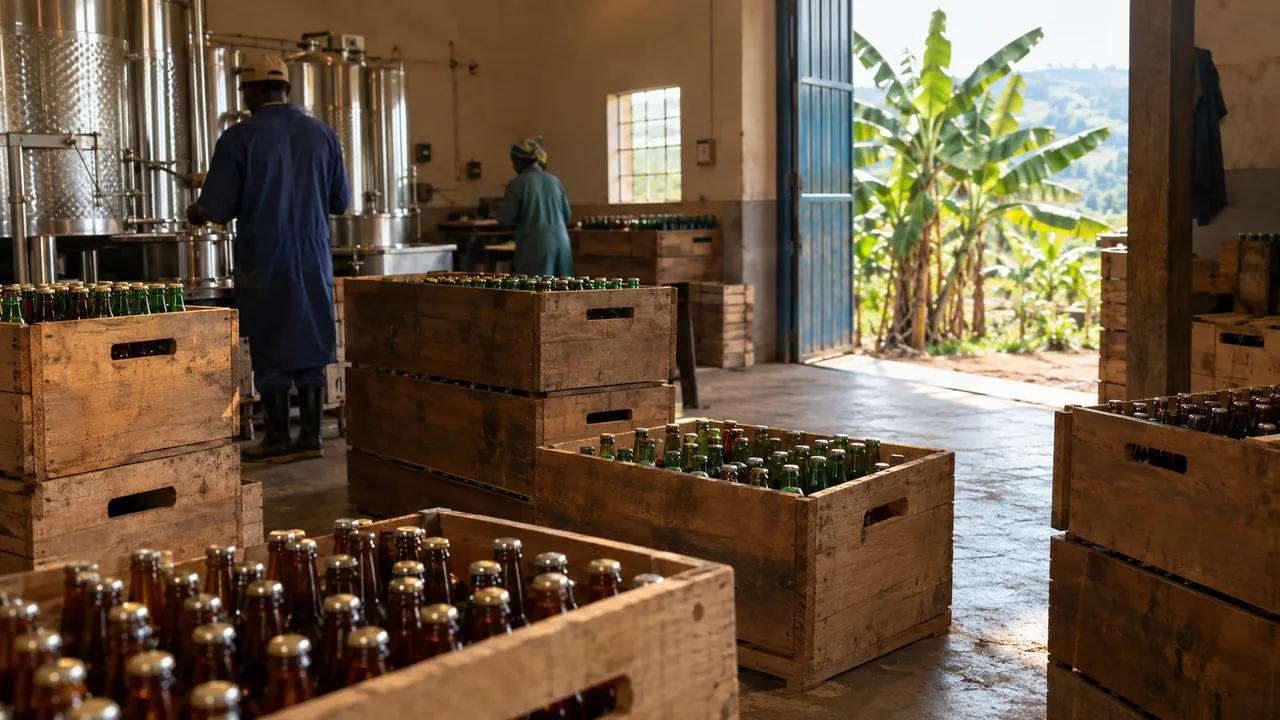
Excise Duty in Rwanda
At a glance
Key points for understanding Rwanda’s excise duty.1,2,3,4
| Question | Answer |
|---|---|
| What is covered? | Specified locally manufactured and imported goods, and some services. |
| Which law established the current framework? | Law No. 011/2025 of 27 May 2025. |
| How are rates expressed? | As a percentage, a fixed charge by unit or quantity, or a combination. |
| What is the import excise base described by the trade guide? | CIF value plus import duty and handling fees. |
| Do all rates use the same period? | No. The published schedule gives financial-year stages for telephone communications and a start date for financial transaction fees. |
Source: Official Gazette of the Republic of Rwanda: Law No. 011/2025 Establishing the Excise Duty (May 2025); Rwanda Revenue Authority: Basic Information on Rwanda Taxation System (November 2025); Ministry of Finance and Economic Planning: Excise Duty Collections by Product; International Trade Administration, U.S. Department of Commerce: Rwanda – Import Tariffs (March 2026)1,2,3,4
Excise is a duty on selected commodities and financial transactions, rather than a general charge on every product or service. It is distinct from customs import duty. An imported product may therefore need to be assessed under both the excise schedule and the applicable customs tariff, each using its own rules.2,4
What excise duty covers
Law No. 011/2025, enacted on 27 May 2025 and published in the Official Gazette on 29 May 2025, establishes Rwanda’s excise duty framework. It covers products manufactured in Rwanda, imported products and services supplied in Rwanda. The rates published for FY2025/26 span beverages, tobacco, petroleum, vehicles, consumer goods and services.1,3
The first step in assessing a product is to match it to the schedule’s precise category. A percentage rate is not interchangeable with a charge per litre, kilogram, unit or pack. Cigarettes combine a percentage and a fixed charge; electronic cigarettes and cartridges have separate fixed amounts. Product descriptions and quantities should therefore be recorded in a way that supports the applicable calculation.3
The rates below are those shown in the Ministry of Finance and Economic Planning’s FY2025/26 schedule, except where the schedule expressly gives a later financial-year rate. Use the category and period that match the transaction. For example, telephone communications have a staged rate, while the listed beer rate is a percentage rate without a staged change in that schedule.3
Rates on beverages and tobacco
Published rates for selected beverages and tobacco products.3
| Product | Excise rate |
|---|---|
| Juice with at least 30% local raw material by weight, including water | 10% |
| Other juices | 39% |
| Lemonades, sodas, beverage syrups and preparations | 39% |
| Beer | 65% |
| Wine | 70% |
| Brandies, liqueurs and whiskies | 70% |
| Other fermented beverages | 65% |
| Cigarettes | 36% of the tax-inclusive retail price plus RWF 230 per pack of 20 rods |
| Cigars and similar tobacco products | 160% |
| Electronic cigarette | RWF 30,000 per unit |
| Electronic cigarette liquid cartridge | RWF 24,400 per unit |
Source: Ministry of Finance and Economic Planning: Excise Duty Collections by Product3
The local-content threshold in this schedule is specific to juice: juice with at least 30% local raw material by weight, including water, has a 10% rate, compared with 39% for other juices. The schedule does not apply that juice threshold to beer, wine or spirits. Businesses should avoid carrying a product-specific concession across to a different category.3
For cigarettes, the 36% component is calculated on the tax-inclusive retail price, alongside RWF 230 for each pack of 20 rods. This is a combined charge, not simply a percentage of the supplier’s invoice or import value. The schedule separately prices electronic cigarettes and liquid cartridges, so keep their units distinct when recording stock or estimating a product’s excise cost.3
Rates on fuel, vehicles and services
Other rates in the published schedule, including staged rates for services.3
| Product or service | Excise rate |
|---|---|
| Petrol, excluding benzene | RWF 183 per litre |
| Gas oil (diesel) | RWF 150 per litre |
| Lubricants and maintenance fluids | 37% |
| Vehicle below 1,500 cc; or hybrid not more than 3 years old from manufacture | 5% |
| Vehicle from 1,500 to 2,500 cc; or hybrid 3–8 years old from manufacture | 10% |
| Vehicle above 2,500 cc; or hybrid more than 8 years old from manufacture | 15% |
| Sweets and chewing gum | RWF 322 per kg |
| Chocolate | RWF 1,930 per kg |
| Cosmetics and beauty products | 15% |
| Telephone communications | 12% in FY2025/26; 14% in FY2026/27; 15% from Year 3 |
| Financial transaction fees | 15% from FY2027/28 |
Source: Ministry of Finance and Economic Planning: Excise Duty Collections by Product3
Vehicle rates are grouped by engine capacity for vehicles generally, with corresponding age bands for hybrids. The schedule refers to hybrid age from the date of manufacture. Engine capacity and, where relevant, manufacturing age are therefore important details when identifying the applicable excise band. These rates are excise charges, not customs tariff rates.3,4
For telephone communications, the published stages are 12% in FY2025/26, 14% in FY2026/27 and 15% from Year 3. Financial transaction fees are listed at 15% from FY2027/28. A business charging for either service should distinguish the period to which the charge relates and avoid applying an earlier rate to a later period.3
How imported goods are costed
The import guide describes excise as applying to CIF value plus import duty and handling fees. CIF means cost, insurance and freight. For a percentage-based rate, using only the supplier’s invoice price as the excise base may therefore give an incomplete import estimate. Identify the product category and rate first, then establish the stated base for the calculation.4
Rwanda is a member of the East African Community customs union and applies the EAC common external tariff to imports from outside the union. The trade guide describes a four-band structure for those imports, with rates depending on the goods’ tariff category and sensitive goods listed separately. Excise is an additional, distinct assessment where the product falls within an excise category.4
A practical sequence for an import cost estimate is:3,4
- Describe the product accurately and match it to the relevant excise category.
- Check whether its excise rate is percentage-based, fixed by quantity, or a combination.
- For a percentage rate, use the import guide’s stated base of CIF value plus import duty and handling fees.
- Assess customs duty separately under the applicable tariff treatment.
- Include other applicable import charges in the landed-cost estimate; the trade guide lists VAT and other levies and fees among import costs.
Source: Ministry of Finance and Economic Planning: Excise Duty Collections by Product; International Trade Administration, U.S. Department of Commerce: Rwanda – Import Tariffs (March 2026)3,4
A tariff concession or exemption from customs import duty should not automatically be treated as an excise exemption. The trade guide describes customs-duty arrangements separately from excise. Keep each charge and its legal basis distinct in import costing, particularly when comparing products sourced locally with imported alternatives.4
Tax periods, stamps and records
The excise law has separate articles covering the time for taxation, the tax period and the period for tax declaration and payment. These are distinct parts of the framework. Businesses should identify the rule that applies to their transaction before setting a filing calendar or payment process, rather than assuming that deadlines for another tax also apply to excise.1
The law also sets out taxpayer obligations concerning registers, affixing a tax stamp to a taxable product, submitting a reconciliation statement on tax-stamp use and keeping books of accounts. These are relevant controls for businesses handling taxable products. Keep product and quantity records organised alongside the accounting information needed to support the tax calculation.1
Useful internal checks include:1,3
- Keep product descriptions aligned with the excise categories in the rate schedule.
- Record quantities in the units used by the rate, such as litres, kilograms, packs or individual units.
- Separate percentage-based charges from fixed charges and combined rates in costing records.
- Maintain the registers, accounts and tax-stamp records required by the law.
Source: Official Gazette of the Republic of Rwanda: Law No. 011/2025 Establishing the Excise Duty (May 2025); Ministry of Finance and Economic Planning: Excise Duty Collections by Product1,3
The law’s contents also identify administrative sanctions and penalties relating to tax-stamp obligations, including failure to keep a tax-stamp register or submit a reconciliation statement on time. A business should treat the associated records as part of its compliance process, not merely as a year-end filing task.1
Exemptions and business planning
Law No. 011/2025 includes an article on exemption from excise duty. A claim depends on the relevant legal category and its conditions; it should not be inferred solely from a product’s customs treatment or from a concession applying to another tax. Keep the product classification and the basis for any exemption together in the business’s supporting records.1,4
For pricing, model percentage rates and fixed charges separately. A fixed amount per litre or kilogram changes with the quantity sold or imported, while a percentage rate depends on the applicable value base. Combined rates, such as the cigarette charge, require both components to be included. This distinction helps with product comparisons and avoids treating an excise rate as the full landed cost.3,4
The published schedule includes rates that change by financial year, notably for telephone communications and financial transaction fees. Businesses should use the rate for the relevant period and check the current law and schedule with the Rwanda Revenue Authority before relying on an exemption or completing a tax calculation.1,3
Frequently Asked Questions
What is the excise duty rate on beer in Rwanda?
The published FY2025/26 rate schedule lists beer at 65%. Excise is separate from customs import duty, so imported beer may face both charges under their respective rules. Use the product category and rate applicable to the transaction period when estimating the tax.
How are cigarettes taxed in Rwanda?
The published schedule lists cigarettes at 36% of the tax-inclusive retail price plus RWF 230 per pack of 20 rods. The calculation combines a percentage and a fixed charge. Keep the retail-price basis and number of packs clear when estimating the excise amount.
How much is excise duty on petrol in Rwanda?
The published schedule lists petrol at RWF 183 per litre, excluding benzene. Gas oil, or diesel, has a separate rate of RWF 150 per litre. These are excise rates and do not represent the full price of fuel or all possible charges.
How is excise duty calculated on imported goods?
The import guide describes excise as applying to CIF value plus import duty and handling fees. CIF means cost, insurance and freight. Customs duty is assessed separately, so identify the tariff treatment and excise category before preparing an import cost estimate.
Does Rwanda charge excise on telephone communications?
Yes. The published schedule lists 12% in FY2025/26, 14% in FY2026/27 and 15% from Year 3. The rate therefore changes by period. Businesses charging for telephone communications should use the stage that applies to the relevant financial year.
Are all products subject to excise duty in Rwanda?
No. Excise applies to specified goods manufactured locally or imported and to some services. The published categories include beverages, tobacco, petroleum, vehicles, consumer goods and services. Check the product description against the schedule rather than assuming every good or service is taxable.
What records does Rwanda’s excise law require?
The law includes obligations to keep registers and books of accounts, affix a tax stamp to a taxable product and submit a reconciliation statement on tax-stamp use. It also identifies sanctions relating to some tax-stamp obligations. Businesses should organise records around the products and quantities covered.
Sources
- Official Gazette of the Republic of Rwanda: Law No. 011/2025 Establishing the Excise Duty (May 2025)
- Rwanda Revenue Authority: Basic Information on Rwanda Taxation System (November 2025)
- Ministry of Finance and Economic Planning: Excise Duty Collections by Product
- International Trade Administration, U.S. Department of Commerce: Rwanda – Import Tariffs (March 2026)
Figures checked 10 November 2026. Prepared by InvestRwanda.com for general information. It is not investment, tax or legal advice; please confirm details with a qualified adviser before acting.