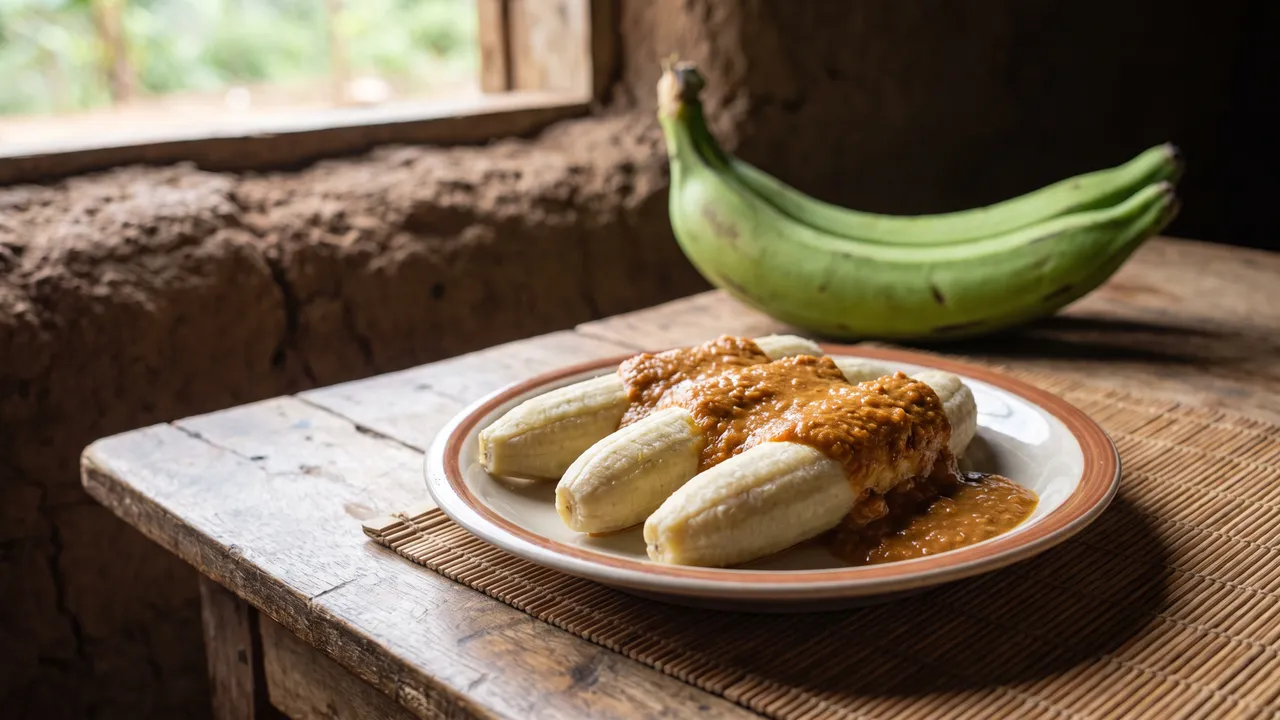
Ibitoki (Cooking Bananas)
At a glance
| Type of dish | Cooked green bananas |
|---|---|
| Rwandan name | Igitoki, plural ibitoki |
| Cooked | Boiled or steamed, sometimes mashed |
| Served with | A sauce of vegetables, groundnuts or meat |
What They Are
Ibitoki are East African Highland bananas, starchy bananas from the Great Lakes region that are harvested green and cooked rather than eaten raw. They are among the most important staple crops of Uganda, Tanzania, Kenya, Burundi and Rwanda. In Rwanda and Burundi, consumption is about 250 to 400 kg per person a year, or roughly three to 11 bananas a day.1
How They Are Cooked
The bananas are peeled and boiled or steamed, and are sometimes mashed. In Rwanda the steamed and mashed meal is considered a national dish. It is typically eaten with a sauce of vegetables, ground peanuts, or meat such as goat or beef.1,2
Bananas in Rwandan History
Researchers quoted by The New Times trace the arrival of bananas in Rwanda to the 1400s, during the reign of Mibambwe I Sekarongoro I Mutabazi. Historian Maurice Mugabowagahunde told the paper that Rwandans grew bananas mainly for beer, and that restaurants serving mashed green bananas are often said to serve “Ugandan food”. In bars, brochettes are sometimes served with boiled or fried green bananas.3
Frequently Asked Questions
What are ibitoki?
Green East African Highland bananas, harvested unripe and boiled or steamed.
How many cooking bananas do Rwandans eat?
About 250 to 400 kg per person a year in Rwanda and Burundi, or roughly three to 11 bananas a day.
How are ibitoki served?
Steamed and mashed, with a sauce of vegetables, ground peanuts, or goat or beef.
Sources
- Wikipedia: Matoke
- Wikipedia: Rwandan cuisine
- The New Times: Tracing the origins and role of bananas in the Rwandan culture
Facts checked 9 November 2026. Prepared by InvestRwanda.com for general information.