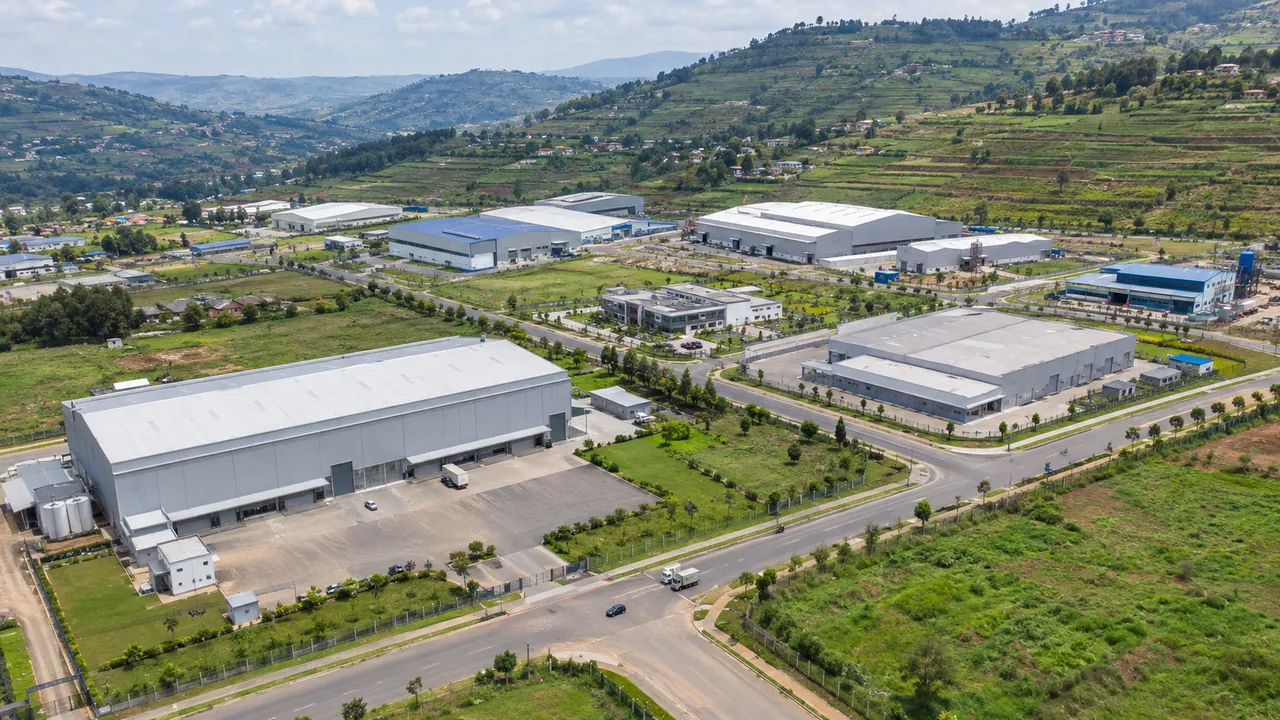
Choosing a Business Location in Rwanda
At a glance
Key points for comparing business locations in Rwanda.1,2,3,4
| Question | What to know |
|---|---|
| Where are the special economic zones? | Kigali and Bugesera. |
| Where are the industrial parks? | Musanze, Rubavu, Muhanga, Rusizi, Huye, Nyabihu, Rwamagana and Nyagatare. |
| What address is needed to register? | A local physical address for the company’s registered office. |
| How is a registered address changed? | By amendment through a notarised resolution. |
| What permits have published service times? | SEZ licences, Kigali construction permits and environmental assessment services. |
| Where is trading licence tax due? | In each district where the business operates, subject to the applicable rules. |
Source: Office of the Registrar General: Business Registration (November 2026); Rwanda Development Board: One Stop Center Service Charter (March 2026); Rwanda Revenue Authority: Trading License; Ministry of Trade and Industry: RWF10 Billion Boost for Four Key Industrial Parks (October 2026)1,2,3,4
Compare the zones and parks
Rwanda has two special economic zones, located in Kigali and Bugesera, and eight industrial parks spread across the country. The parks are in Musanze, Rubavu, Muhanga, Rusizi, Huye, Nyabihu, Rwamagana and Nyagatare. More than 320 factories have been established in the zones and parks; over 70% were reported fully operational in October 2026, with the rest at different stages of development.4
Four parks were selected for RWF 10 billion of infrastructure investment in the 2025–2026 fiscal year.4
| Location | Status or infrastructure focus |
|---|---|
| Musanze | Priority park for infrastructure investment. |
| Rwamagana | Priority park for infrastructure investment. |
| Muhanga | Priority park for infrastructure investment. |
| Bugesera | Priority location; it has an industrial park and a special economic zone. |
Source: Ministry of Trade and Industry: RWF10 Billion Boost for Four Key Industrial Parks (October 2026)4
The 2025–2026 investment was intended to support land clearance and basic infrastructure, including access roads, electricity, water supply and treatment facilities. The government described the four locations as a phased priority based on strategic investor interest. For a project that depends on these services, establish what is available at the specific plot and at the time you plan to operate.4
Match the site to the activity
Rwanda’s Industrial Policy 2024–2034 identifies sectors for accelerated industrialisation. These include agro-processing, such as horticulture, tea and sugar; light manufacturing, including leather, textiles and pharmaceuticals; tradable services, including tourism and digital services; and heavy manufacturing, such as automotive, steel and glass. Use the policy priorities as context when comparing park locations, but assess each site against the project’s actual land, utility and transport requirements.4
Compare candidate sites against practical operating needs.2,3,4
- For manufacturing, check the plot’s access to electricity, water, roads and treatment facilities, particularly where a park is receiving phased infrastructure investment.
- For an SEZ project, identify the relevant user, developer or operator licence and any construction or occupational permit required.
- For offices or other activities outside an industrial park, make sure the registered address and actual operating locations are recorded correctly.
- Check the district or districts in which the business will operate, since trading licence tax is linked to district activity.
Source: Rwanda Development Board: One Stop Center Service Charter (March 2026); Rwanda Revenue Authority: Trading License; Ministry of Trade and Industry: RWF10 Billion Boost for Four Key Industrial Parks (October 2026)2,3,4
Register the office address
The Office of the Registrar General requires a local physical address as the company’s registered address. Registration is an online process and is free. The ORG states that registration is completed within six working hours when the application meets the requirements; a certificate of incorporation is issued when registration is complete. Applicants need to provide the office address along with company and shareholder details and other required information.1
The registered office is not a substitute for choosing a workable operating site. A company can amend its address after incorporation, as well as other company details, through a notarised resolution. Before filing, distinguish the address used for registration from any additional branches or operating premises, and keep the company records consistent with where it does business.1
After registration, the ORG instructs a new business owner to register with the Tax Administration within seven days of beginning business. The RDB One Stop Center can help investors with licensing and permits, including services provided through the ORG and the SEZ office. Its service charter describes it as a point of contact for domestic and foreign investors setting up or expanding a business.1,2
Understand land rights
Foreign investors can own and establish businesses in Rwanda. Land ownership is a separate question: under the 2021 land law, foreign investors may acquire real estate subject to the general land-ownership rules. The US Department of State’s 2026 statement says freehold is granted to Rwandan citizens for properties of no more than two hectares, while foreigners may receive freehold for property in designated special economic zones or by Presidential Order in exceptional circumstances of strategic national interest.5
Long-term leases are an alternative to freehold. The 2026 investment climate statement describes emphyteutic leases in residential and commercial areas as typically lasting 99 years, renewable, and available to citizens and foreigners acquiring land through private means. Foreign investors may also use renewable agreements for government private land, which cannot exceed 99 years. These general rules are distinct from the arrangements for a particular SEZ or industrial-park plot.5
For strategic investment on State land, the 2022 Prime Minister’s Order provides for a competitive process organised by the land ministry with the investment-promotion organ. It also allows a request for a State land concession or lease without competition for strategic purposes. The request is made through the investment-promotion organ and includes a business plan, evidence that the project is a strategic investment and the land area required. Assessment considers the land-use master plan, whether the land is reserved for another use and its suitability. Environmental impact assessment is evaluated before a concession or lease is granted.6
Check permits and service times
Allow time for permits before fixing a construction or opening date. The RDB One Stop Center service charter, published in March 2026, lists a 21-day service time for a new construction permit in Kigali. It lists 10–15 days for an SEZ construction permit and 10–15 days for an SEZ occupational permit. These are published service times, not a guarantee that a project will be ready to operate by a particular date.2
Selected RDB One Stop Center service-charter times, March 2026.2
| Service | Published time |
|---|---|
| SEZ user licence | 24 hours |
| SEZ developer or operator licence | 15 days |
| SEZ construction permit | 10–15 days |
| SEZ occupational permit | 10–15 days |
| New construction permit in Kigali | 21 days |
| Environmental impact assessment clearance | 15 days |
| Environmental impact assessment certificate | 45 days |
Source: Rwanda Development Board: One Stop Center Service Charter (March 2026)2
A clearance and a certificate are listed as separate environmental services with different service times. Confirm which one applies to the project and build that step into the permit sequence. The charter also lists the SEZ user, developer and operator licences separately, so identify the required licence category rather than treating them as interchangeable.2
Allow for district trading licence tax
Trading licence tax applies to a person who opens a business activity within a district, including head offices, branches and individual traders. A business operating in more than one district files a declaration in each district where it operates. The tax is generally calculated using turnover from the previous year; for a new taxpayer opening a business, the RRA states that the declaration and payment are based on starting capital.3
The RRA’s published rate schedule sets annual amounts by turnover band for profit-oriented activities. Activities not registered for income tax are charged according to whether the location is classified as urban or rural. The trading licence can be declared and paid annually or quarterly; annual payment is due by 31 January, while quarterly dates are 31 January, 30 April, 31 July and 31 October. Micro and small enterprises are exempt during their first two years of operation.3,7
District trading licence tax is separate from the cost of acquiring or leasing a site. Include it in the operating budget for each district where the business will conduct taxable activity.3,7
Plan the location decision
A practical sequence for an investor is:1,2,3,4,6
- Shortlist sites by activity: compare the Kigali and Bugesera SEZs with the eight industrial parks where manufacturing or agro-processing is planned.
- Check the land-use fit and the proposed plot’s access to the services the project needs.
- Clarify whether the land is privately held, leased through a zone arrangement or State land requiring a concession or lease process.
- Secure the local physical address needed for company registration, then complete the registration application with the ORG.
- Identify the relevant SEZ, construction and environmental permits, and allow for their published service times.
- Map operating locations by district and account for trading licence tax and the required tax registration after business begins.
Source: Office of the Registrar General: Business Registration (November 2026); Rwanda Development Board: One Stop Center Service Charter (March 2026); Rwanda Revenue Authority: Trading License; Ministry of Trade and Industry: RWF10 Billion Boost for Four Key Industrial Parks (October 2026); Official Gazette of the Republic of Rwanda: Prime Minister’s Order 8 of 2022 determining Modalities for Land Allocation and Acquisition, Emphyteutic Lease, and State Land Concession and Lease (July 2022)1,2,3,4,6
Before signing a lease or committing to construction, confirm the plot’s land-use status, the applicable land arrangement, infrastructure availability and permit sequence with the responsible authority or site operator. These checks help distinguish a registered office address from the land and approvals needed to run the business.2,5,6
Frequently Asked Questions
Does a Rwandan company need a physical registered office?
Yes. The Office of the Registrar General requires a local physical address as the company’s registered address. The address is part of the registration information. A company may amend its address after incorporation through a notarised resolution, so it should update its company records when the registered office changes.
Where are Rwanda’s special economic zones?
Rwanda’s two special economic zones are in Kigali and Bugesera. Bugesera is also among the country’s industrial-park locations. Before choosing a plot, establish the relevant land arrangement, infrastructure availability and any SEZ licence or construction permit required for the planned activity.
Which towns have industrial parks in Rwanda?
The eight industrial parks are in Musanze, Rubavu, Muhanga, Rusizi, Huye, Nyabihu, Rwamagana and Nyagatare. Musanze, Rwamagana and Muhanga were among four parks selected for infrastructure investment in the 2025–2026 fiscal year; Bugesera was the fourth priority location.
How long does it take to get an SEZ user licence?
The RDB One Stop Center service charter published in March 2026 lists 24 hours for an SEZ user licence. The same charter lists 15 days for an SEZ developer or operator licence. These are separate services, so identify the licence category that applies to the project when planning the approval process.
Can a foreign investor own land in Rwanda?
Foreign investors can acquire real estate subject to Rwanda’s land rules. The US Department of State’s 2026 investment climate statement says foreigners may receive freehold for property in designated special economic zones or by Presidential Order in exceptional strategic circumstances. Renewable long-term leases are also available, subject to the applicable terms.
How long does a construction permit take in Kigali?
The RDB One Stop Center service charter published in March 2026 lists 21 days for a new construction permit in Kigali. It separately lists 10–15 days for an SEZ construction permit. These are published service times; confirm which permit applies to the site and project.
Do I pay trading licence tax in every district where my business operates?
The Rwanda Revenue Authority states that a business activity spread across more than one district must file a trading licence tax declaration in each district where it operates. The tax is generally based on previous-year turnover, while a new taxpayer opening a business declares and pays based on starting capital.
Sources
- Office of the Registrar General: Business Registration (November 2026)
- Rwanda Development Board: One Stop Center Service Charter (March 2026)
- Rwanda Revenue Authority: Trading License
- Ministry of Trade and Industry: RWF10 Billion Boost for Four Key Industrial Parks (October 2026)
- U.S. Department of State: 2026 Investment Climate Statements: Rwanda (October 2026)
- Official Gazette of the Republic of Rwanda: Prime Minister’s Order 8 of 2022 determining Modalities for Land Allocation and Acquisition, Emphyteutic Lease, and State Land Concession and Lease (July 2022)
- Rwanda Revenue Authority: Trading License – Kigali
Figures checked 10 November 2026. Prepared by InvestRwanda.com for general information. It is not investment, tax or legal advice; please confirm details with a qualified adviser before acting.