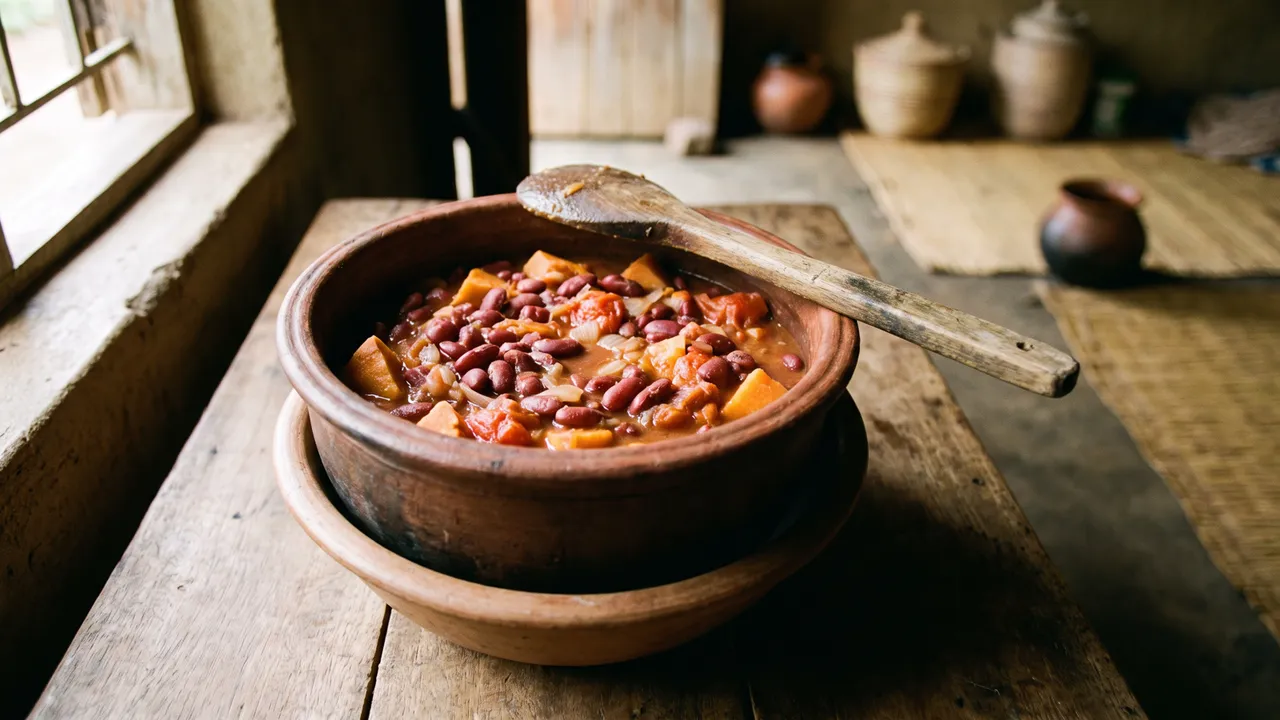
Ibishyimbo (Beans)
At a glance
| Type of food | Staple legume |
|---|---|
| Rwandan name | Ibishyimbo |
| Kinds grown | Bush beans and climbing beans |
| Eaten with | Rice, ubugali, plantains, potatoes or cassava |
Source: CGIAR: Research and development partnerships to strengthen inclusive and demand driven bean value chain in Rwanda (15 November 2021); Wikipedia: Rwandan cuisine1,2
Why Beans Matter
According to CGIAR, beans are the main staple food in Rwanda, providing households with 32% of the calories and 65% of the protein they need. Rwandans eat about 164 grams of beans per person a day, the highest per capita bean consumption in the world. Beans are also the most important source of income for farmers.1
How They Are Grown
Both bush beans and climbing beans are grown across the country, and the climate suits the crop. Climbing beans grow vertically, which makes them useful in densely populated areas where farmland is limited. CGIAR notes that most farmers still have low yields, which affects their food security and income.1
How They Are Eaten
Beans are part of most Rwandan lunches, served alongside a staple such as rice, ubugali, plantains, potatoes or cassava. Ibihaza, pumpkin cooked with beans, is another common dish. Beans are among the produce shown and shared at Umuganura, the national harvest day held on the first Friday of August.2,3
Frequently Asked Questions
How important are beans in Rwanda?
They are the main staple, providing 32% of household calories and 65% of protein.
How many beans do Rwandans eat?
About 164 grams per person a day, the highest bean consumption in the world.
Why are climbing beans grown?
They grow vertically, which suits densely populated areas where farmland is limited.
Sources
- CGIAR: Research and development partnerships to strengthen inclusive and demand driven bean value chain in Rwanda (15 November 2021)
- Wikipedia: Rwandan cuisine
- The New Times: How Umuganura is transcendental and unifying in Rwandan society
Facts checked 9 November 2026. Prepared by InvestRwanda.com for general information.