Ikivuguto (Fermented Milk)
At a glance
| Type of food | Fermented milk |
|---|---|
| Made from | Raw cow’s milk |
| Traditional method | Natural souring by microbes from containers and the cattle’s surroundings |
| Modern production | Dairies using selected starter cultures |
Source: FAO AGRIS: Karenzi E. et al., Kivuguto traditional fermented milk and the dairy industry in Rwanda, a review (2013)1
What It Is
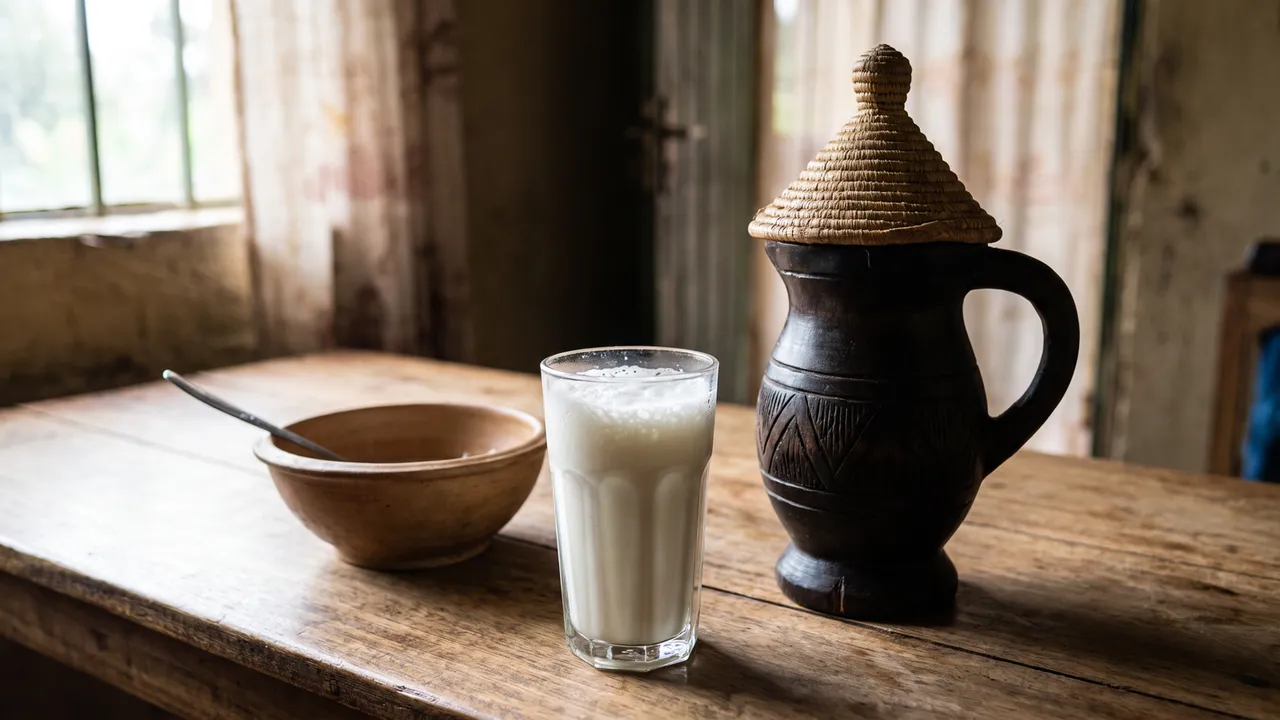
Ikivuguto, also written kivuguto, is a fermented milk product popular in Rwanda. It has a thick texture and a sour taste that varies from one producer to the next.1
How It Is Made
Traditionally, raw milk is left to sour on its own. The microorganisms that ferment it come from the utensils and containers used to keep the milk and from the area around the cattle. Because the fermentation is not controlled, the taste varies and the traditional product does not keep for long. Modern dairies make fermented milk with selected starter cultures instead.1
From Farm to Market
Milk collection cooperatives have also started to make ikivuguto. The Rwanda Agriculture and Animal Resources Development Board reports that the Musasa cooperative in Gakenke District produces 350 litres of ikivuguto a day at its milk collection centre.2
Frequently Asked Questions
What is ikivuguto?
A thick fermented milk, one of the most popular dairy products in Rwanda.
How is ikivuguto made?
Traditionally, raw milk is left to sour on its own. Modern dairies use selected starter cultures.
Do cooperatives make it?
Yes. The Musasa cooperative in Gakenke District produces 350 litres a day at its milk collection centre.
Sources
- FAO AGRIS: Karenzi E. et al., Kivuguto traditional fermented milk and the dairy industry in Rwanda, a review (2013)
- Rwanda Agriculture and Animal Resources Development Board: How CDAT revitalized Musasa Cooperative’s milk collection centre
Facts checked 9 November 2026. Prepared by InvestRwanda.com for general information.