Culture and Traditions of Rwanda
Music and dance
Intore, "the chosen ones", is a troupe dance in which lines of dancers play warriors on a battlefield, leaping with spears and shields to drums, horns and songs of victory. It was once performed for the royal court by young men trained at Itorero, where they learned values, public speaking and the arts.1,2
Today Intore is taught in schools and universities and danced at weddings, harvest festivals and the reception of guests. Performances can be seen at the National Museum, cultural villages and many hotels.1,2
Arts and crafts
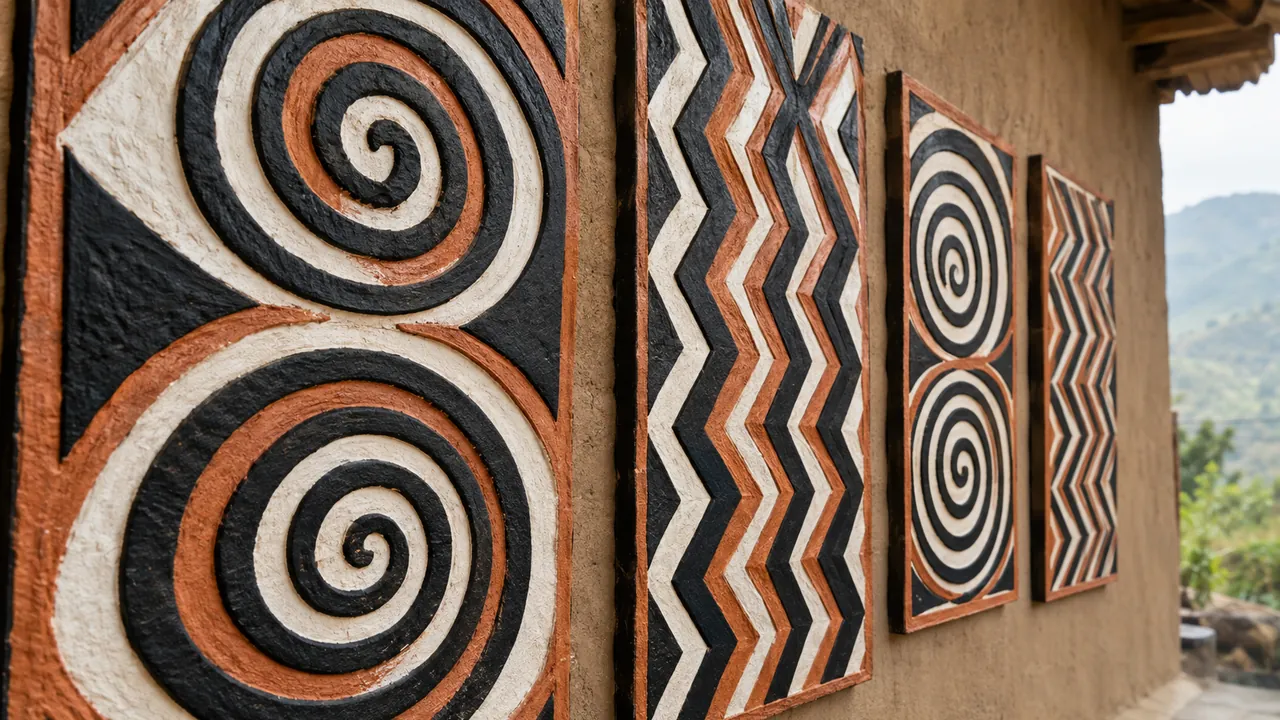
- Imigongo: bold geometric panels in black, brown and white, traditionally moulded from cow dung, made by a co-operative at Nyakarambi near the Tanzanian border and sold in craft markets.
- Baskets: tightly woven baskets, including the lidded peace basket, were used to store food and given at weddings and as welcome gifts.
- Pottery: one of Rwanda’s oldest crafts, still made with Batwa techniques and used for cooking and storing liquids.
- Amasunzu: the crested hairstyle once worn by men and women as a sign of nobility and courage.
Source: Visit Rwanda: Rwandan culture and traditions2
Shared values
The Government of Rwanda names unity, patriotism, social cohesion, resilience and hard work as shared values, with Kinyarwanda as the common language. They underpin the home-grown solutions of today, such as Umuganda community work and Imihigo performance contracts.3
Umuganura, the harvest festival on the Friday of the first week of August, celebrates the first crops of the season and Rwandan culture. Kwita Izina, the gorilla naming ceremony held since 2005, has become a national celebration of conservation.4,5
Heritage to visit
- King’s Palace Museum, Nyanza: a reconstruction of the traditional royal residence, with long-horned Inyambo cattle.
- Ethnographic Museum (National Museum), Huye: one of the finest ethnographic collections in East Africa.
- Rwanda Art Museum, Kigali: contemporary Rwandan and foreign art in the former Presidential Palace.
- Kandt House Museum, Kigali: the colonial period, in the old house of the first colonial governor.
- UNESCO World Heritage sites: Nyungwe National Park and the memorial sites of Nyamata, Murambi, Gisozi and Bisesero, inscribed in 2023.
Source: Visit Rwanda: Culture and heritage, museums; UNESCO World Heritage Centre: Rwanda6,7
Frequently Asked Questions
What is Intore?
A troupe dance in which lines of dancers play warriors, leaping with spears and shields to drums. UNESCO added it to its intangible heritage list in December 2024.
Where can I see Intore performed?
At the National Museum, cultural villages and many hotels.
What is Umuganura?
The harvest festival, held in August. It is a public holiday.
When was the first Kwita Izina?
In 2005. It is the gorilla naming ceremony.
Sources
- UNESCO: Decision 19.COM 7.B.4, Intore
- Visit Rwanda: Rwandan culture and traditions
- Government of Rwanda: About Rwanda
- UNESCO: Umuganura harvest celebration
- Visit Rwanda: Kwita Izina
- Visit Rwanda: Culture and heritage, museums
- UNESCO World Heritage Centre: Rwanda
Facts checked 9 November 2026. Prepared by InvestRwanda.com for general information.