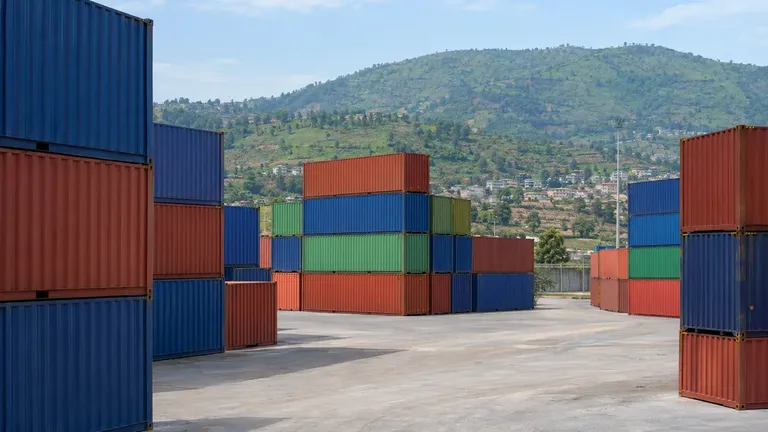
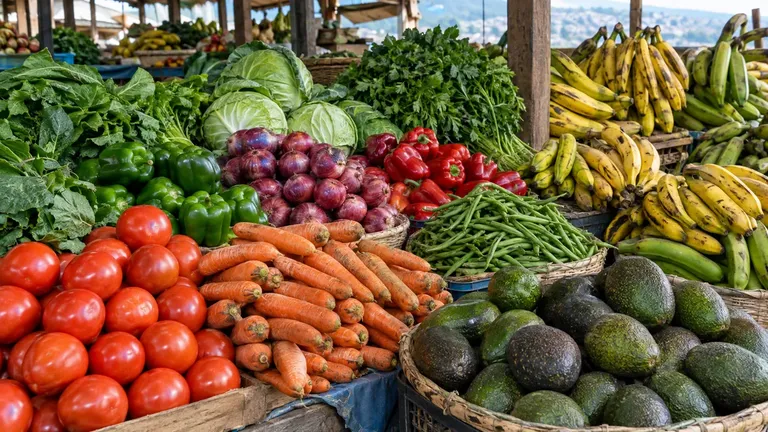
Rwandan goods worth about €26 million entered the EU under the Everything But Arms scheme in 2025, twice the 2024 value, and the scheme continues when US preferences end in 2027. What the figures show, how Rwanda compares with Uganda, Tanzania and Kenya, and which exporters gain most.
The European Union imported about €118 million of goods from Rwanda in 2025, of which €26 million entered under preferential arrangements, twice the value of 2024, the EU Ambassador to Rwanda, Jérémie Blin, wrote in The New Times on 12 November. The preference in question is Everything But Arms (EBA), which gives the UN's least developed countries duty-free and quota-free access to the EU for all products except arms and ammunition. Blin also noted that the EU's revised Generalised Scheme of Preferences (GSP) will apply from 1 January 2027 for the next decade and that EBA will continue. The timing matters: the same date is when Rwanda is due to lose its US trade preferences under AGOA, as covered in our analysis of 12 November.
The utilisation figures need context. The EU's GSP Hub, which tracks how the scheme is used, shows that Rwanda's preference utilisation rate, the share of eligible goods that actually claimed the EBA tariff preference, was almost 94% in 2023, fell to 22% in 2024 and recovered to 86% in 2025. The GSP Hub explains the 2024 dip: a single export of transport equipment to the EU, worth more than €43 million, did not use preferences. Because utilisation is measured against eligible trade, one large shipment without preferences pulled the rate down; the share of Rwandan exports to the EU that were eligible for EBA also fell, from 43% in 2024 to 26% in 2025. The jump in the utilisation rate is therefore mainly a return to the earlier pattern. The value that actually entered duty-free under EBA did grow: it doubled to about €26 million, according to Blin, and the share of all EU imports from Rwanda that used EBA rose from 9% to 22%, according to the GSP Hub.
Most Rwandan exports to the EU do not need EBA at all. According to the GSP Hub, overall EU imports from Rwanda are led by coffee and tea, and coffee and ores are among the products for which a fairly large share of EU imports is duty-free under normal tariffs. The goods that rely on the preference are different: in 2025 the largest EBA product groups were apparel, agricultural products including edible oils, fruit and vegetables and plants, and light manufactures. Utilisation was close to 100% for all of these except apparel, at 78%, and at 95% or above for cut flowers, fruit and vegetables and furniture.
Rwanda's own statistics show the EU as a larger and steadier market than the United States. In the quarterly tables of the National Institute of Statistics of Rwanda (NISR), domestic exports to the EU rose from about USD 90.3 million in 2023 to USD 141.9 million in 2024 and USD 153.0 million in 2025, roughly 9.6% of domestic exports that year, compared with USD 44.6 million for the US (InvestRwanda.com calculations from the NISR annex tables). In the first half of 2026, exports to the EU reached USD 91.1 million, 23% more than a year earlier, with USD 63.9 million in the second quarter alone. NISR and EU figures are compiled on different bases and in different currencies, so the totals do not match.
Within the East African Community, Rwanda, Burundi, Tanzania and Uganda are classed as least developed countries, while Kenya is not, according to the European Commission. Kenya trades with the EU under a bilateral Economic Partnership Agreement that entered into force on 1 July 2024, and accounted for 38% of the EU's trade with the region, which totalled €8.1 billion in 2025. The GSP Hub puts Uganda's 2025 EBA utilisation at 97%, with 11% of its EU exports eligible, and Tanzania's at 96%, with 39% eligible. Rwanda's 86% is now in a similar range, and its eligible share of 26% lies between the two.
For companies, the main point is predictability. Exporters of horticulture, cut flowers, edible oils, furniture and garments, the categories where EBA saves duty, keep duty-free access to the EU from 2027, while their access to the US becomes less favourable. For investors assessing export-oriented agro-processing or light manufacturing in Rwanda, EU access is a predictable element, subject to rules of origin and EU product standards. The apparel utilisation rate of 78% suggests that some garment exporters still pay duty they could avoid, which the GSP Hub figures do not explain. Blin pointed to EU support for the National Agricultural Export Development Board (NAEB) on quality assurance, testing and compliance, and to the EAC programme MARKUP II for small and medium-sized enterprises, as channels for firms that want to export more.
What to watch next: the start of the revised GSP on 1 January 2027 and any change in the rules that apply to Rwandan goods; the EU's 2026 trade figures, which will show whether the 2025 recovery in preference use holds; and NISR's quarterly trade report for the third quarter of 2026, which will show whether the rise in exports to the EU continued. EBA is tied to least developed country status, so any future move by Rwanda out of that UN category would change the basis of its access.

 Analysis