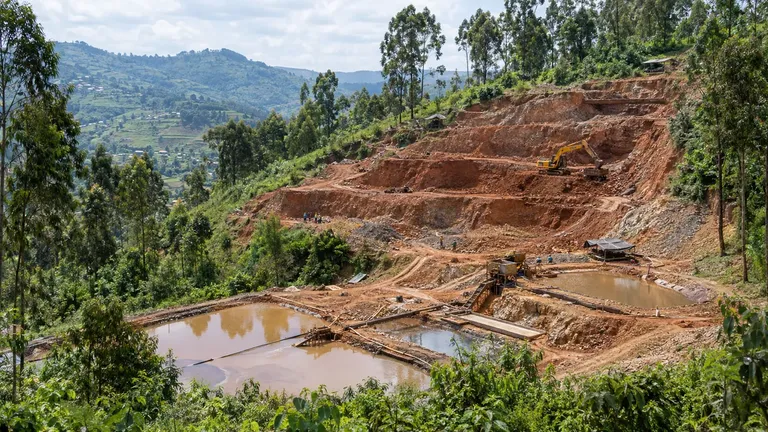
Prime Minister Justin Nsengiyumva cited the results of Rwanda’s cleaner production programme and called for blended finance, guarantees and carbon finance to make green industrial projects bankable.
Prime Minister Justin Nsengiyumva made the case for green industrialisation at the 31st UN Climate Change Conference (COP31) in Antalya, Türkiye, on 11 November 2026, calling it both a climate imperative and an opportunity to attract investment and create jobs, The New Times reported.
He pointed to Rwanda’s Resource Efficient and Cleaner Production Programme, which helps factories and small businesses use less electricity, water and raw materials. He said it had helped industries and SMEs cut energy use by more than 41 million megajoules and emissions by more than 30,000 tonnes of CO2 a year, generating USD 6.5 million in net savings on a USD 5 million investment. RadioTV10 noted that these are long-term results first documented by 2021 for work dating back to 2008, not new savings. The National Industrial Research and Development Agency (NIRDA) puts the figures at USD 6.58 million saved and USD 5.19 million invested, with annual reductions of more than 22,300 tonnes of solid waste and about 153,000 cubic metres of water. According to NIRDA, 115 industries received training, 92 were assessed and 46 local specialists were trained.
The Prime Minister named renewable energy, electric mobility, clean cooking, sustainable agriculture and recycling as areas where Rwanda wants more private investment. He gave particular attention to cooling. With global demand rising, he said, the Kigali Amendment to the Montreal Protocol shows how climate action and industry can reinforce each other, and Rwanda’s National Cooling Strategy, minimum energy performance standards and financing mechanisms give investors a practical foundation.
He said scaling up would require partners to share risk. “To scale up, we need partners to share risk through blended finance, concessional loans, guarantees and carbon finance, so that green industrial projects become bankable,” he said, urging development partners and financial institutions to move from commitments to practical partnerships.
Under its updated climate plan, Rwanda aims to cut emissions by 53 percent by 2035 against a business-as-usual scenario, at an estimated cost of USD 12 billion.
For manufacturers, the message is that efficiency upgrades and cooling equipment that meets the minimum energy performance standards are policy priorities. RadioTV10 noted that the published programme figures do not show how savings were distributed among individual companies, and that financing remains a major obstacle for firms that want to replace machinery or adopt cleaner technology.

 Investments