
Setting Up a Company in Rwanda
At a glance
The main steps and the relevant authority or channel.1,2,3,4
| Step | Where or how | Key point |
|---|---|---|
| Choose a legal form and name | Office of the Registrar General (ORG), within RDB | The company name must be approved before incorporation. |
| Prepare the application | RDB business-registration portal | Provide identity, company, activity and registered-address details. |
| Register the company | Online through the RDB portal | Free; normally completed within six working hours when requirements are met. |
| Check tax obligations | RDB and Rwanda Revenue Authority (RRA) systems | The company code also serves as the TIN; VAT registration depends on turnover. |
| Apply for permits or investment registration | Relevant regulator or RDB One Stop Centre | Requirements and processing times vary by activity. |
| Maintain company records and file returns | RDB/ORG and, where applicable, RRA | Annual filings and notifications continue after registration. |
Source: Rwanda Development Board: One Stop Center Service Charter (March 2026); Office of the Registrar General: Business Registration (November 2026); Rwanda Revenue Authority: Register your business; Rwanda Development Board: Business Procedures in Rwanda1,2,3,4
Choose a legal form
The two broad business-registration categories are an individual enterprise and a limited liability company. An individual enterprise is an unincorporated business owned by one person. A company is a separate legal person: it can own property and is responsible for its own debts, while liability for shareholders is generally limited to their stake in the company.2
Domestic companies can be limited by shares, limited by guarantee, limited by both shares and guarantee, or unlimited. A private company limited by shares has no minimum initial share capital and must have at least one shareholder; it can have up to 100. A public company has no stated maximum number of shareholders, but regulators set its minimum initial share capital. Private companies cannot operate in banking, insurance or finance; investors entering those sectors must set up public companies.2,4
Shareholders may be Rwandan or foreign individuals, or legal entities. The ORG allows 100% non-local shareholding. A foreign parent may also register a subsidiary or a branch; a branch has no separate legal standing, while a subsidiary is a separate legal entity.2,5
Prepare the application
Secure approval of the proposed company name before incorporation. The ORG can reject a name that is unlawful, misleading, contrary to good morals, or identical or too similar to a reserved or existing company name. You will also need a local physical address for the registered office.2
For an application involving individual shareholders, prepare:2,5
- An active email address and an ID card or passport for the people involved.
- The approved company name, proposed business activities and registered office address.
- Details of shareholders, board members and directors.
Source: Office of the Registrar General: Business Registration (November 2026); Office of the Registrar General: Requirements (November 2026)2,5
A foreign corporate shareholder in a subsidiary or joint venture needs notarised copies of its registration certificate and articles of association, plus a notarised shareholders’ resolution setting out the new company’s name, activity, management and shareholding. For a branch, the resolution should authorise opening the branch and nominate its representative. The ORG lists accepted notarial services in Rwanda and abroad; resolutions must be original documents signed before the notarising authority.5
Register online
The usual company-registration process is:2,5
- Create an application through the RDB business-registration portal and enter the approved name, legal form, address and proposed activities.
- Provide the required identity and shareholder, director and board-member particulars. Upload supporting documents for corporate shareholders or other applicant types.
- Submit the application and respond to any requirements needed to complete it.
- Download the business-registration or incorporation certificate from the account once registration succeeds.
Source: Office of the Registrar General: Business Registration (November 2026); Office of the Registrar General: Requirements (November 2026)2,5
Registration is 100% online and free of charge. The ORG says a compliant application is completed within six working hours, and RDB’s March 2026 service charter lists six hours for issuing the business-registration certificate. In Rwanda, applicants who have difficulty with the online process can seek help from the ORG support team at the RDB building, 1 KG 9 Ave, Kigali.1,2
Understand tax registration
The registration process links RDB and RRA systems. The company code shown on the incorporation certificate also serves as the company’s TIN and social security number. A person starting a taxable business must register with the Registrar General within seven days of beginning business activity; online company registration carries out the business registration step.3,4
VAT registration is required after either turnover threshold is exceeded.3,4
| Turnover test | VAT registration deadline |
|---|---|
| More than RWF 20 million in a 12-month period | Within seven days after the end of the year in which the threshold is exceeded. |
| More than RWF 5 million in three consecutive months in the preceding quarter | Within seven days after the end of the relevant quarter. |
| Turnover below the thresholds | VAT registration may be voluntary. |
Source: Rwanda Revenue Authority: Register your business; Rwanda Development Board: Business Procedures in Rwanda3,4
A business registered for VAT must acquire an Electronic Billing Machine (EBM) with immediate effect. The ORG also states that businesses registered through the RDB portal are obliged to have EBM. Employers with an employee receiving basic salary above RWF 60,000 must register for Pay As You Earn (PAYE) and pay it through the RRA system. Other tax filings depend on the company’s activities and tax status.3,6
Apply for investment registration and permits
An investment certificate is optional: it is not a condition for ordinary company incorporation. Investors seeking incentives can register an investment project with RDB. RDB’s published requirements include an application letter, a business plan or feasibility study, proof of the company’s legal personality and the relevant sector licence. The stated fee is USD 500 or its equivalent in Rwandan francs, and the 2026 service charter lists a 24-hour issuance time for an investment certificate.1,7
RDB describes project evaluation criteria including non-trading activity, creation of quality jobs, skills and knowledge transfer, use of local raw materials, export potential, business linkages, and innovation. Registration gives access to incentives set out in the investment framework where the project meets the applicable conditions; the certificate itself does not mean every incentive applies automatically.7
Some activities also require sector licences or environmental approval. The March 2026 RDB service charter gives indicative service times of 15 days for EIA clearance and 45 days for an EIA certificate. Other permits have their own processes and timelines, so identify the regulator for the planned activity before committing to an operating date.1
Meet continuing obligations
After incorporation, put recurring compliance dates and company records in place:6,8
- Notify the Registrar General of a change to beneficial-owner information within 14 days. Dormant companies must submit beneficial-owner information each year.
- Keep required company records in Rwanda for at least 10 years. These include incorporation documents, share and beneficial-ownership registers, accounting records, minutes and annual accounts.
- File annual accounts and related reports within seven months of the accounting reference date for a private company, or four months for a public company. The default accounting reference date is 31 December.
- Submit the annual return in the month allocated to the company. The return confirms that the information on the register is correct.
- File tax declarations and make payments by the deadlines for each tax that applies. Domestic tax, customs duties and local-government taxes and fees are paid digitally.
Source: Office of the Registrar General: Obligations of a taxpayer who registering business (November 2026); Rwanda Development Board: Public Notice Regarding Compliance Obligations for All Registered Companies (May 2022)6,8
The ORG’s post-registration guidance also gives a six-month filing period for foreign companies’ annual returns and accounts. Changes to registered company details, such as the address, management or shareholding, must be notified through the RDB system; the information is then updated in the RRA system. Keep the company’s records and filing calendar aligned with its legal form and accounting year.6
Where to get help
The ORG support team is located at RDB’s building, 1 KG 9 Ave, Kigali, and assists applicants who encounter difficulties with online registration. The RDB One Stop Centre brings together services from RDB and other participating authorities, including investment registration and a range of licences and permits. For tax registration and filing matters, use the RRA channels. Check the relevant authority’s current requirements before submitting an application, especially where the business needs a sector licence or investment approval.1,2,3,7
Frequently Asked Questions
How do I register a company in Rwanda?
Apply online through the RDB business-registration portal. First have the company name approved, then submit the company details, local registered address, proposed activities and particulars of shareholders, directors and board members. Registration is free. A compliant application is normally completed within six working hours, after which the certificate can be downloaded from the applicant’s account.
How much does it cost to register a company in Rwanda?
Online registration through the RDB portal is free of charge. The ORG says a compliant application is usually completed within six working hours. Separate services may have fees: for example, RDB lists a USD 500 fee for investment registration. Sector licences and other approvals have their own requirements and costs.
Can a foreigner own 100% of a Rwandan company?
Yes. The Registrar General allows 100% non-local shareholding, and shareholders may be foreign individuals or legal entities. A foreign corporate shareholder must provide the required company documents and resolutions, with notarisation requirements depending on whether it is forming a subsidiary, joining a joint venture or opening a branch.
Is there a minimum share capital for a private company in Rwanda?
A private company limited by shares does not require minimum initial share capital, according to the Registrar General. A public company is different: its minimum initial share capital is set by regulators. Private companies cannot conduct banking, insurance or finance business; investors in those sectors must establish a public company.
Does company registration automatically provide a TIN in Rwanda?
The RDB and RRA registration systems are integrated. The company code shown on the incorporation certificate also serves as the company’s tax identification number and social security number. A person starting a taxable business must register with the Registrar General within seven days of beginning business activity.
When must a new company register for VAT in Rwanda?
VAT registration is required when turnover exceeds RWF 20 million in a 12-month period or RWF 5 million in three consecutive months in the preceding quarter. Registration is due within seven days after the end of the year or quarter in which the relevant threshold is exceeded. Businesses below the thresholds may register voluntarily.
Do I need an investment certificate to do business in Rwanda?
No. Company incorporation and investment registration are separate processes, and an investment certificate is optional for ordinary business registration. Investors seeking applicable investment incentives can apply to RDB with an application letter, business plan or feasibility study, proof of legal personality and the relevant sector licence. The published fee is USD 500.
Step by step

Company registration step by step
Rwanda company registration is free online. See the steps, documents, timing and tax obligations.
Free Government fee for online business registration
Read more
Investment certificate
The USD 500 RDB certificate registers an investment project and connects it with incentives and facilitation.
USD 500 Investment certificate registration fee, or its equivalent in Rwandan francs
Read more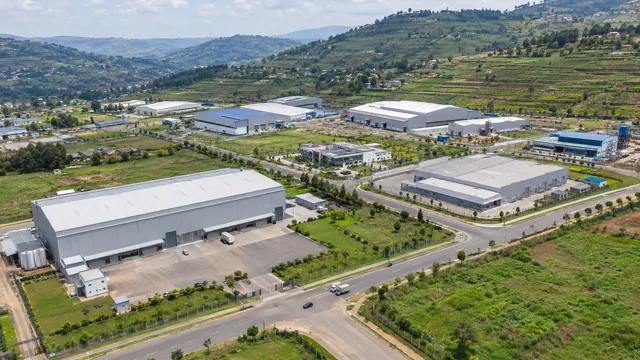
Choosing a location
A practical guide to Rwanda’s special economic zones, industrial parks, land and permits.
2 Special economic zones, in Kigali and Bugesera
Read more
Licences and permits
Rwanda’s One Stop Centre, selected permit times and trading licence tax rates and deadlines.
2008 Year the RDB One Stop Centre was created
Read more
Opening a business bank account
Prepare company, director and ownership information before applying for a Rwandan business bank account.
10 years Minimum period for retaining beneficial-owner verification records
Read more
Beneficial ownership register
What companies must report, how to update the register and how long to keep records.
14 days Period for notifying the Registrar General of a change to the internal beneficial ownership register
Read more
Tax registration (TIN) and EBM
Rwanda TIN routes, VAT thresholds and EBM obligations for businesses.
Free TIN registration through the RRA service
Read more
Sources
- Rwanda Development Board: One Stop Center Service Charter (March 2026)
- Office of the Registrar General: Business Registration (November 2026)
- Rwanda Revenue Authority: Register your business
- Rwanda Development Board: Business Procedures in Rwanda
- Office of the Registrar General: Requirements (November 2026)
- Office of the Registrar General: Obligations of a taxpayer who registering business (November 2026)
- Rwanda Development Board: One Stop Centre (April 2026)
- Rwanda Development Board: Public Notice Regarding Compliance Obligations for All Registered Companies (May 2022)
Figures checked 10 November 2026. Prepared by InvestRwanda.com for general information. It is not investment, tax or legal advice; please confirm details with a qualified adviser before acting.