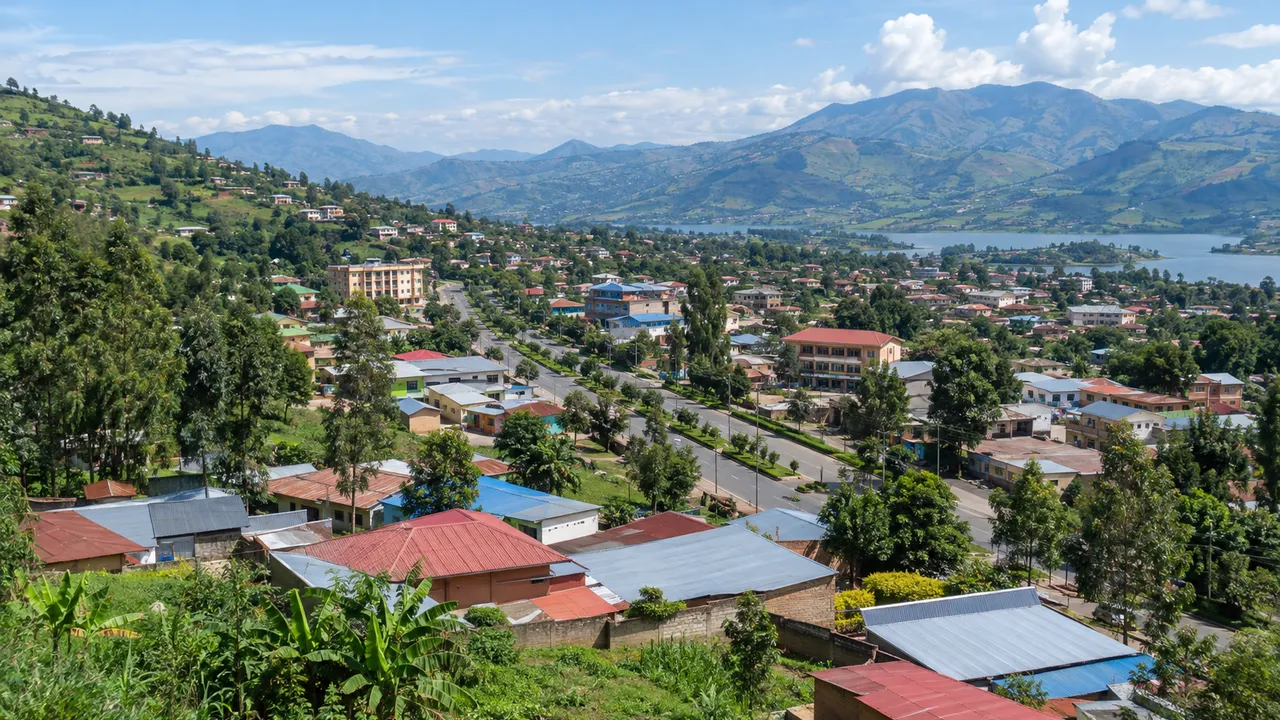
Cities and District Towns of Rwanda
The six secondary cities
| City | Province | Role in the urbanisation policy | District urban share | Industrial park |
|---|---|---|---|---|
| Musanze | Northern | Eco-friendly mountain tourism and industry | 49.2% | 164 ha |
| Rubavu | Western | International gateway city and tourism | 53.9% | 226 ha |
| Huye | Southern | Education, knowledge and cultural history | 20.9% | 50 ha |
| Muhanga | Southern | Hydropower and mining; creative economy (pottery and fashion) | 24.3% | 135 ha |
| Rusizi | Western | Cross-border trade and transport logistics, Nyungwe forest | 33.4% | 41.4 ha |
| Nyagatare | Eastern | Cattle and dairy region, commercial hub of the east | 24.1% | 200 ha |
Rwanda’s main cities
The other district towns
Every district has a main town where the district office sits. The table lists the 21 districts that are neither in Kigali nor home to a secondary city, ranked by the share of their people living in urban areas.
| District | Province | Population (2022) | Urban |
|---|---|---|---|
| Bugesera | Eastern | 551,103 | 40.1% |
| Rwamagana | Eastern | 484,953 | 37.1% |
| Kamonyi | Southern | 450,849 | 31.6% |
| Nyabihu | Western | 319,047 | 24.5% |
| Kayonza | Eastern | 457,156 | 14.2% |
| Nyamagabe | Southern | 371,501 | 10.9% |
| Ruhango | Southern | 359,121 | 10.9% |
| Rulindo | Northern | 360,144 | 10.6% |
| Gatsibo | Eastern | 551,164 | 10.0% |
| Burera | Northern | 387,729 | 9.9% |
| Nyanza | Southern | 365,718 | 9.2% |
| Ngoma | Eastern | 404,048 | 9.2% |
| Karongi | Western | 373,869 | 9.0% |
| Nyamasheke | Western | 434,221 | 7.7% |
| Gicumbi | Northern | 448,824 | 6.3% |
| Kirehe | Eastern | 460,860 | 6.3% |
| Rutsiro | Western | 369,180 | 5.6% |
| Ngororero | Western | 367,955 | 4.9% |
| Gakenke | Northern | 365,292 | 4.0% |
| Gisagara | Southern | 397,051 | 3.4% |
| Nyaruguru | Southern | 318,126 | 2.4% |
Frequently Asked Questions
Which are Rwanda’s secondary cities?
Six cities chosen as poles of growth: Musanze, Rubavu, Huye, Muhanga, Rusizi and Nyagatare.
What does each secondary city have?
A role in the national urbanisation policy, an industrial park, and urban works funded with the World Bank under the Rwanda Urban Development Project.
How urban is Rwanda?
27.9% of Rwandans lived in urban areas in 2022. Rubavu, at 53.9%, is the most urban district outside Kigali.
The cities
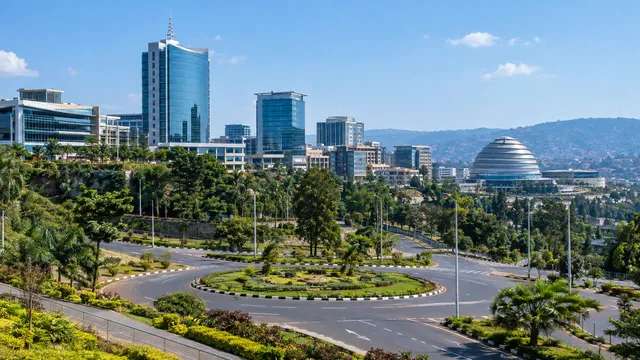
Kigali
The capital: three districts, the main zone, the airport and most services.
1,745,555 People in the City of Kigali, 2022 census
Read more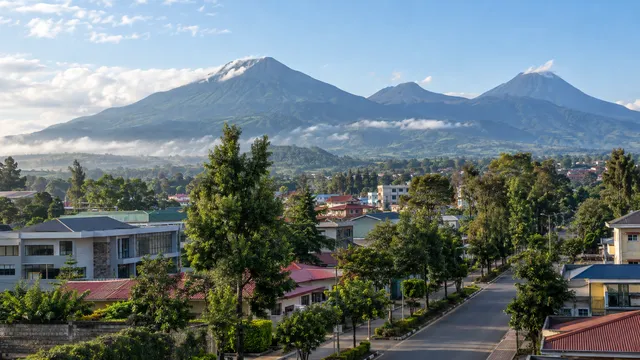
Musanze
The gateway to the volcanoes, with a 164 ha industrial park.
476,522 People in Musanze district, 2022 census
Read more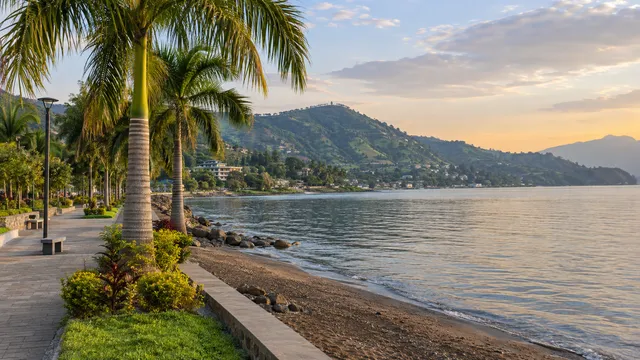
Rubavu
The lake city next to Goma: the port, methane power and border trade.
546,683 People in Rubavu district, 2022 census
Read more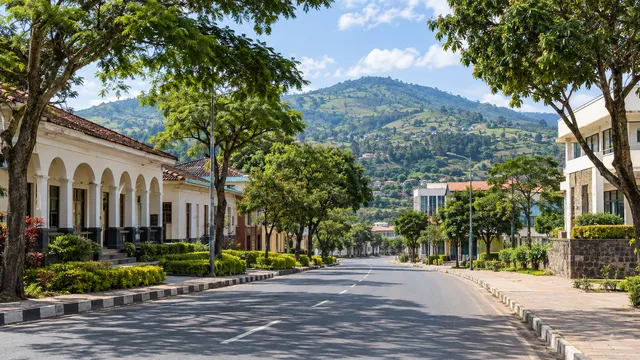
Huye
The city of education, with a busy 50 ha industrial park.
381,900 People in Huye district, 2022 census
Read more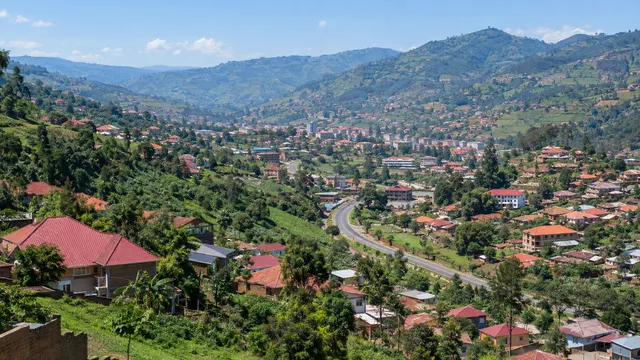
Muhanga
West of Kigali, with a 135 ha park for heavy and light industry.
358,433 People in Muhanga district, 2022 census
Read more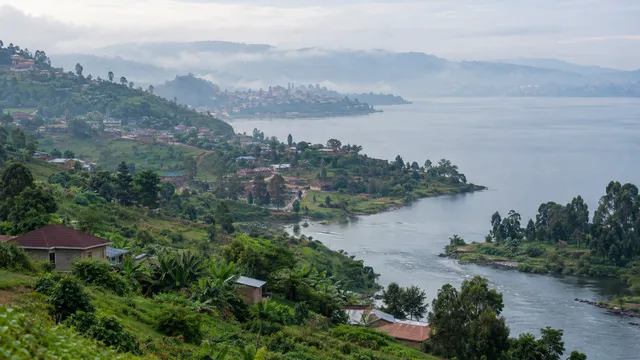
Rusizi
Border trade with Bukavu, an airport, a new port and Nyungwe next door.
485,529 People in Rusizi district, 2022 census
Read more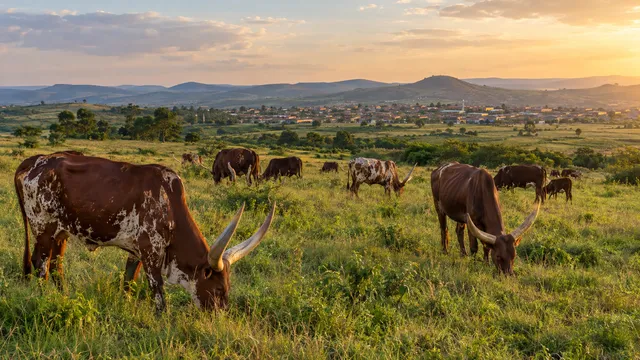
Nyagatare
The cattle and dairy region, with a 200 ha agro-processing park.
653,861 People in Nyagatare district, 2022 census
Read more
Sources
- Ministry of Infrastructure: Urbanisation, human settlement and housing development
- Ministry of Infrastructure: National Urbanization Policy (2015)
- National Institute of Statistics of Rwanda: Fifth Population and Housing Census 2022, Main Indicators Report
- Ministry of Trade and Industry: Annual Report 2024-2025
Figures checked 9 November 2026. Prepared by InvestRwanda.com for general information. Figures come from the sources listed.