Skip to content
Fact Sheet No. 09 November 2026
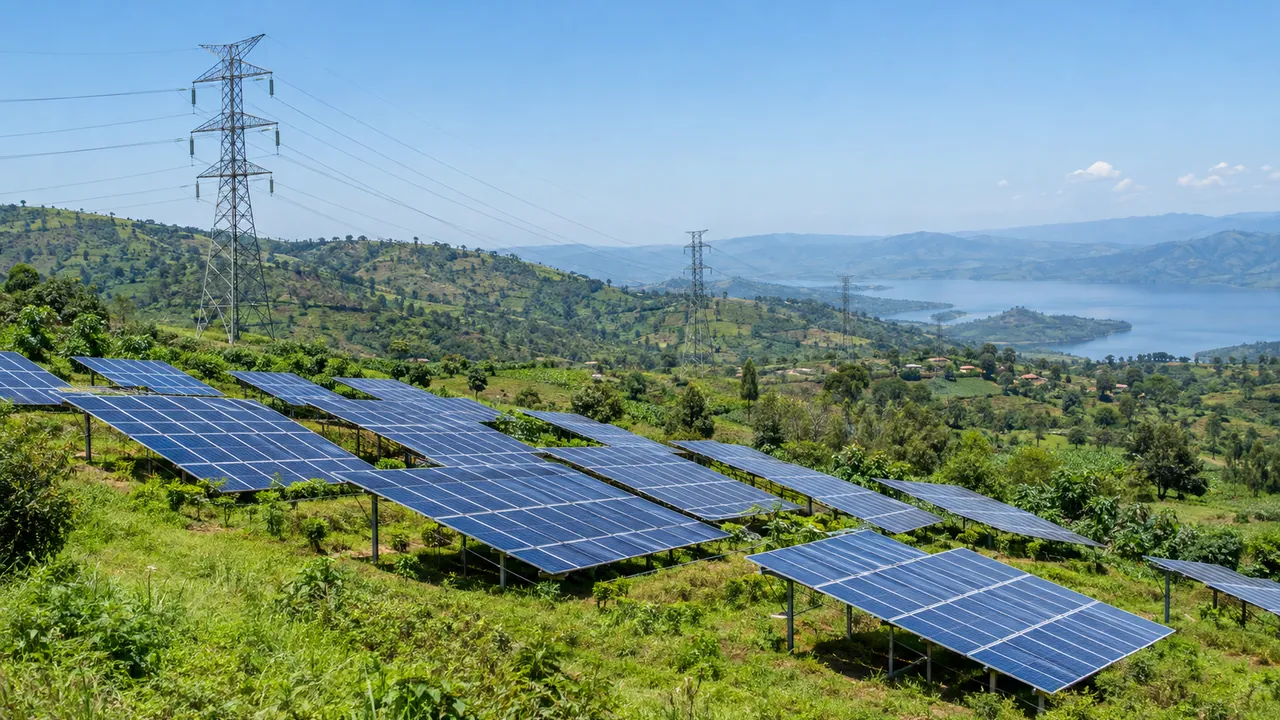
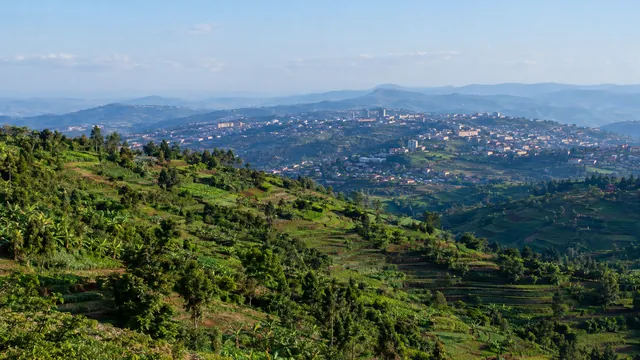
A solar farm and power lines on a hillside in eastern Rwanda

Energy

Energy and Utilities

Rwanda’s generating capacity is 472.95 MW, about double that of 2020/21, and 85.4% of households had electricity at the end of 2025. Tariffs are set by the regulator RURA: since 1 October 2025 industry pays FRW 97 to 175 per kWh, and other businesses FRW 355 to 376.

Installed generating capacity
472.95 MW1
Installed generating capacity
Households with electricity, end of 2025
85.4%2
Households with electricity, end of 2025
Water per m³ for industry, before VAT
FRW 7363
Water per m³ for industry, before VAT
Population covered by 4G
96%4
Population covered by 4G

Power

Of the 85.4% of households with electricity, 60.1% are on the grid and 25.3% use solar systems. The Government aims for universal access by 2029, and the Rwanda Energy Group plans for about 1,066 MW of capacity by 2034.2,5

Electricity tariffs

Electricity tariffs
Customer FRW per kWh, before VAT
Small industry, large hotels, data centres 175
Medium industry 133
Large industry, over 1 million kWh a year 110
Steel, mining and cement 97
Non-residential, up to 100 kWh a month 355
Non-residential, above 100 kWh a month 376

Source: Rwanda Utilities Regulatory Authority: Public notice on electricity end-user tariffs, October 20256

Industrial customers also pay a monthly demand charge per kVA at peak and shoulder hours.6

Water and fuel

  • Water (WASAC): industry pays a flat FRW 736 per m³; other businesses FRW 877 up to 50 m³ a month and FRW 895 above.
  • Fuel: RURA caps pump prices, VAT included. Since 6 June 2026 the caps are FRW 2,938 per litre of petrol and FRW 2,927 of diesel.

Source: Rwanda Utilities Regulatory Authority: Water statistics, second quarter of 2024; The New Times: Transport fares remain unchanged as diesel price increases3,7

Telecoms

Bundled mobile data cost an average of FRW 0.79 per MB in the second quarter of 2026, and a standard call FRW 35 to 45 a minute. Of 84,152 fixed broadband subscriptions, 81.7% were on fibre.8

Sources

  1. Rwanda Energy Group: Home page, REG at a glance
  2. Rwanda Energy Group: Electricity access reaches 85.4%, up from 64.53% five years ago
  3. Rwanda Utilities Regulatory Authority: Water statistics, second quarter of 2024
  4. GSMA: Digital reforms could connect over 1 million more people to mobile internet in Rwanda
  5. Rwanda Energy Group: Strategic Plan 2024–2034
  6. Rwanda Utilities Regulatory Authority: Public notice on electricity end-user tariffs, October 2025
  7. The New Times: Transport fares remain unchanged as diesel price increases
  8. Rwanda Utilities Regulatory Authority: ICT sector statistics, second quarter of 2026

Figures checked 9 November 2026. Prepared by InvestRwanda.com for general information. It is not investment, tax or legal advice; please confirm details with a qualified adviser before acting.

investrwanda.com Companies, sectors, regions and guides for doing business in Rwanda since 2026.

Fact Sheet No. 09 · November 2026 © Invest Bulgaria Group EOOD

More fact sheets

  • No. 01 November 2026

    Investment environment

    Rwanda at a Glance

    The country, the economy and the business climate on one page: population, GDP and growth, inflation and the franc, ratings, trade blocs, tax and the first steps for an investor.

    RWF 23,387 bn GDP at current prices, 2025

    Read the fact sheet
  • No. 02 November 2026

    Tax

    Taxes in Rwanda

    The main business taxes in one page: corporate income tax and the reduced rates, VAT, withholding taxes, PAYE, social security, customs and the filing deadlines.

    28% Corporate income tax, standard rate

    Read the fact sheet
  • No. 03 November 2026

    Employment

    Salaries and Labour Costs

    What staff cost in Rwanda: average and median pay, pay by sector, what an employer adds for RSSB, PAYE on a sample salary and the main rules of the labour law.

    FRW 83,110 Average monthly income of paid employees, 2025

    Read the fact sheet
  • No. 04 November 2026

    Setting up

    Setting Up a Company in Rwanda

    From registration to the first invoice: the company forms, online registration with the Registrar General, the investment certificate, tax and EBM, beneficial ownership, licences and the bank account.

    Free Government fee for online registration

    Read the fact sheet
  • No. 05 November 2026

    Residency

    Residency and Work Permits

    Visas on arrival, the temporary permit classes for investors, entrepreneurs, employees and retirees, family permits, permanent residence and how to apply on IremboGov.

    RWF 150,000 Fee for most new temporary permits

    Read the fact sheet
  • No. 06 November 2026

    Real estate

    Real Estate in Rwanda

    What foreigners can buy, how land is held on lease, the steps of a purchase, the taxes on owning, letting and selling, mortgages and the official price data.

    49 years Lease for residential, commercial and industrial land

    Read the fact sheet
  • No. 07 November 2026

    Economic zones

    Special Economic Zones and Industrial Parks

    Rwanda’s two special economic zones and eight industrial parks: size, companies, land prices, who runs them, the SEZ user licence and Export Processing Zone status.

    10 Special economic zones and industrial parks

    Read the fact sheet
  • No. 08 November 2026

    Finance

    Kigali International Financial Centre

    What the Kigali International Financial Centre offers: the vehicles available, the 3% and 15% tax rates, substance tests, fund licensing with the Capital Market Authority and the size of the local fund market.

    3% Corporate income tax for qualifying funds and holding companies

    Read the fact sheet
  • No. 10 November 2026

    Trade

    Trade and Exports

    Rwanda’s trade agreements, its main export earners, customs duties and the road corridors to the ports of Mombasa and Dar es Salaam.

    331 million Citizens of the eight EAC partner states

    Read the fact sheet